
Scrub notes
Bathtub and tile with an electric cleaning brush
By TUYU Home Care · Updated October 11, 2026
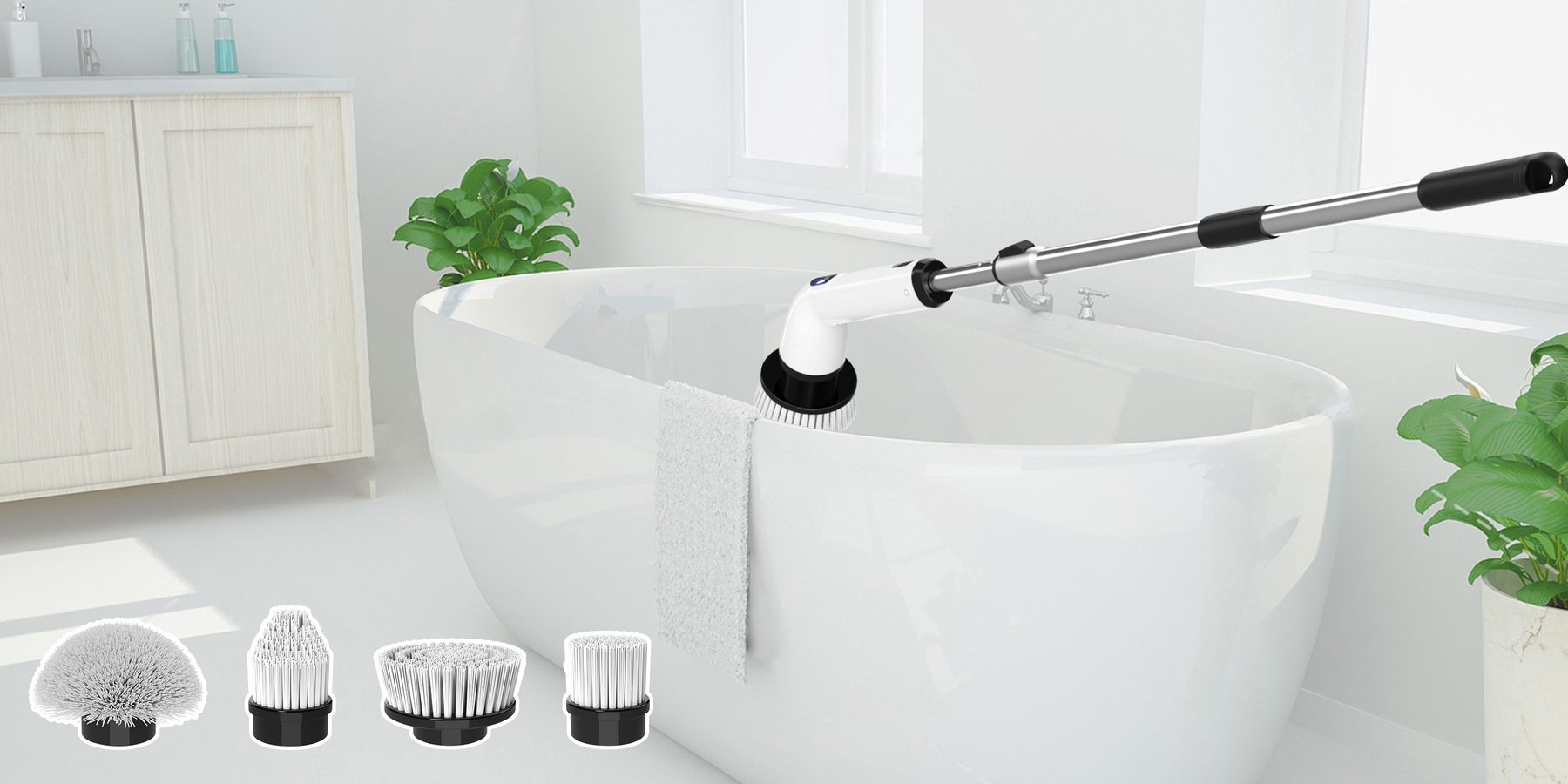
Bathtubs and tile look similar from across the room and behave very differently under a brush. An electric cleaning brush handles both, but the brush head, the speed and the cleaner should change with the surface. Here is how to scrub each type of tub and tile without scratching it, and how to deal with grout and hard water.

Choosing an electric cleaning brush for the bathtub and tile
An electric cleaning brush for the bathtub and tile has a harder job than a kitchen tool: it works low on the tub floor and high on the wall, it gets soaked, and it has to be gentle on acrylic while still lifting grime from textured floor tile. Look for a power spin scrubber with an adjustable, extendable handle long enough to reach the far side of the tub without leaning in, a rechargeable battery with real battery life, and a set of attachments that includes both bristle brushes and soft pads.
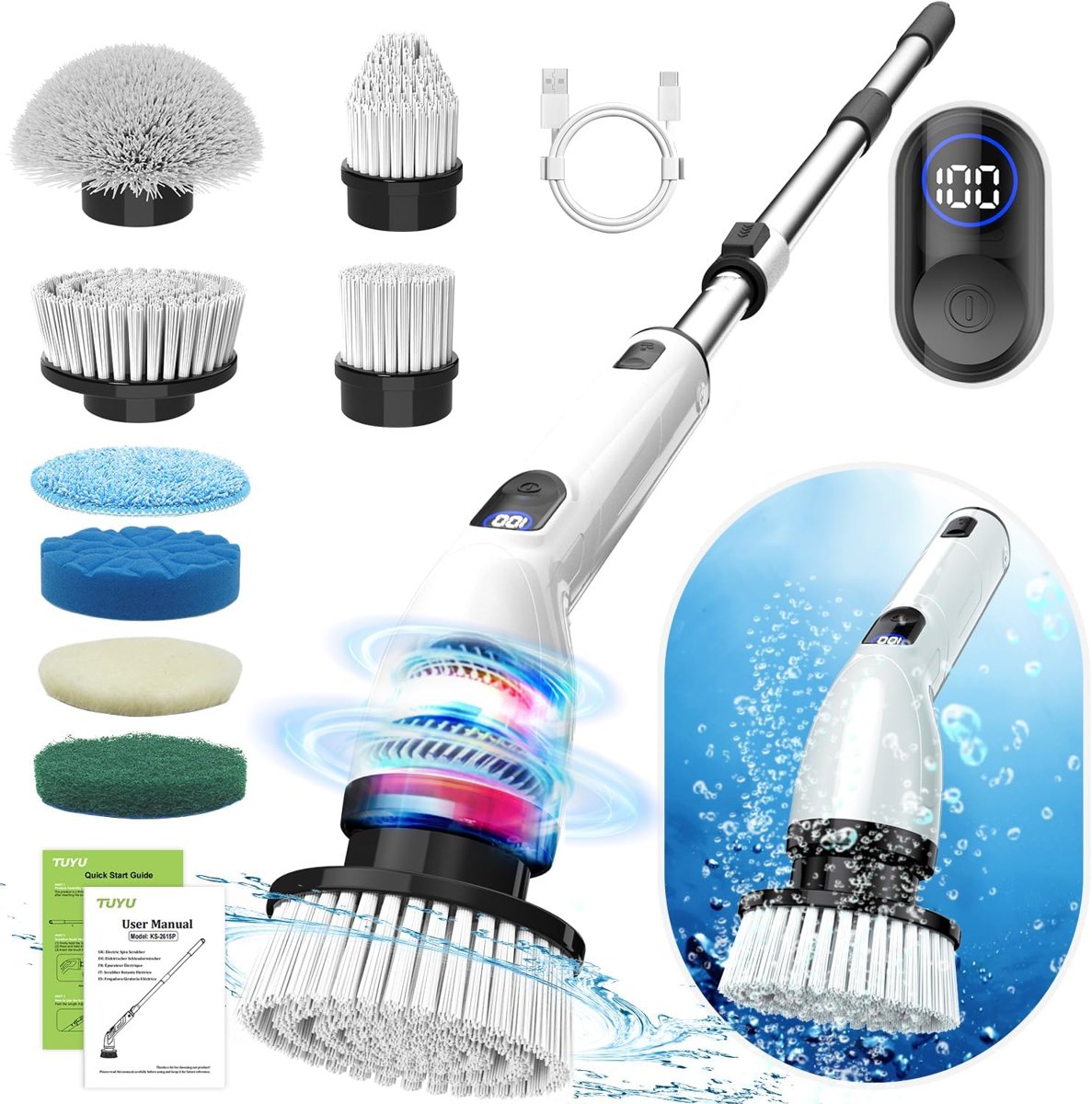
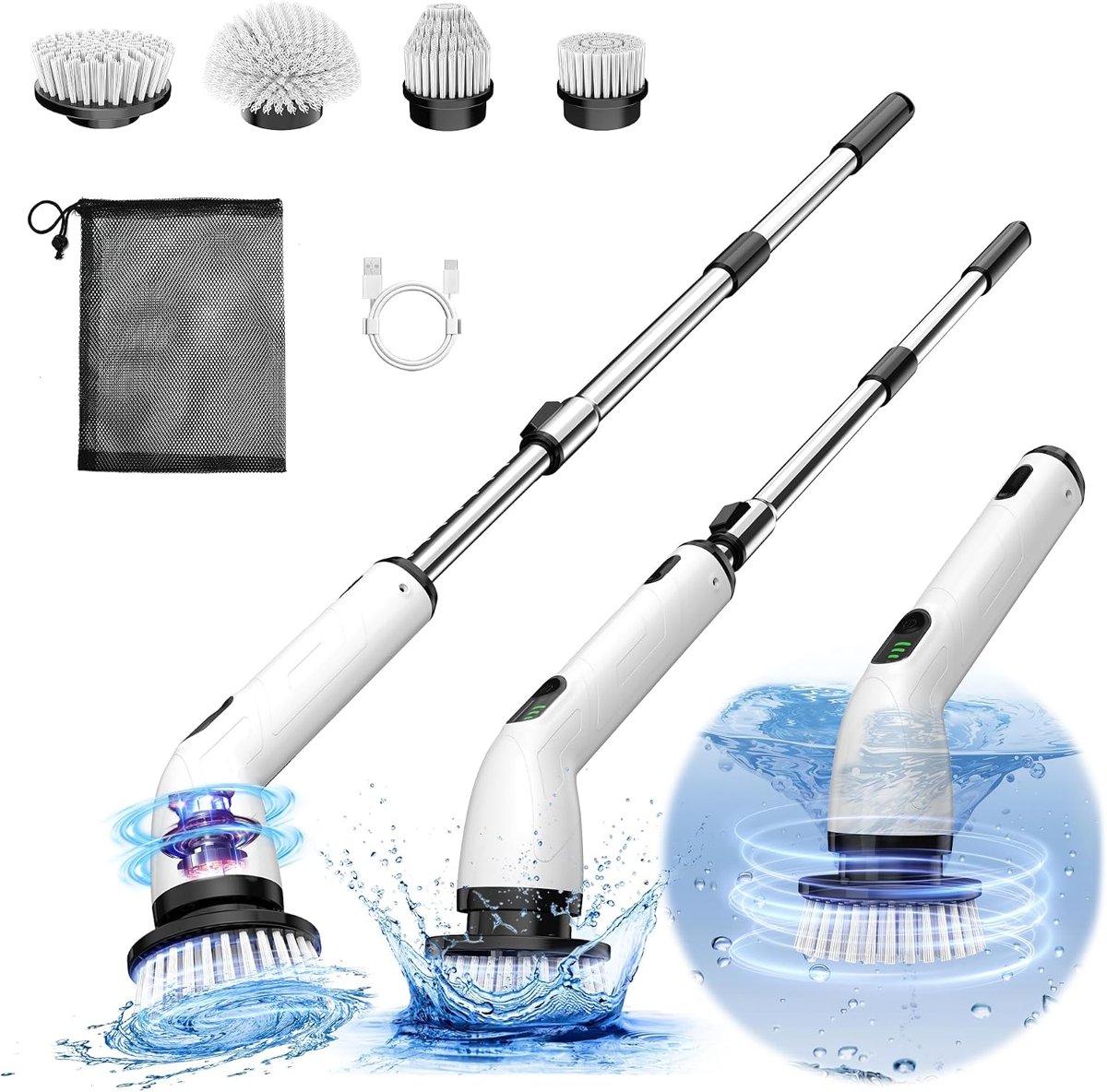
The TUYU models share one motor and one handle, so the difference between them is the attachments and the shell. The 8-head kit comes with four brushes and four pads, which is the versatile set for acrylic tubs and glass. The 4-head kit has the brushes only. The full-body IPX7 model seals the housing for a shower-over-tub you clean with the water running. All three are comfortable to hold at arm's length and convenient to store on a hook.
Know your tub before you scrub
Acrylic and fiberglass tubs are the most common in newer homes. They are warm to the touch, slightly flexible and scratch more easily than they look. Enamelled steel and cast-iron tubs are hard and cold, with a glassy surface that tolerates firmer scrubbing but can dull with harsh abrasives. Stone and composite tubs need the gentlest approach of all.
For acrylic and fiberglass, use the dome brush on low speed or a sponge pad, with a non-abrasive bathroom cleaner. For enamel and cast iron, the dome brush on high speed is fine. Test any new combination in a corner first.
Scrubbing the bathtub, step by step
- Run a little water and spray the tub with your cleaner; leave it for three to five minutes.
- Fit the dome brush and extend the handle so you can stand outside the tub.
- Scrub the walls of the tub first, then the floor, in slow overlapping passes.
- Use the corner brush on the seam where the tub meets the wall and around the drain and overflow.
- Rinse with the shower head and feel for any rough patches; give those a second pass.
Do not add pressure to speed things up. A spinning brush cleans by speed and repetition; leaning on it slows the motor and does not lift grime faster.
Glazed tile, textured tile and natural stone
Glazed ceramic and porcelain wall tile is easy: the large flat brush on low speed removes soap film and splash marks quickly. Textured floor tile and anti-slip shower trays hold dirt in their surface and need high speed and a stiffer brush; this is where an electric brush is far better than a mop.
Natural stone such as marble or travertine is softer and reacts to acids. Use a stone-safe cleaner and a soft pad on low speed, never a vinegar spray. Rinse well afterwards so no cleaner stays in the pores.
Grout: the line a mop never cleans
Grout is porous, sits below the tile surface and collects soap scum, body oil and mildew. A large flat brush rides over it; a pointed corner brush puts its bristles straight into the line. Follow each grout line once on high speed. For tile floors, work in rows so you do not lose track of which lines are done.
If grout is discoloured rather than dirty, let a dedicated grout cleaner sit for the time on its label before you scrub. Seal the grout once it is clean and dry; sealed grout stays clean far longer between scrubs.
Hard water, soap scum and rust marks
Hard-water marks are mineral deposits. They need an acidic or descaling cleaner to dissolve before the brush can lift them, so give the cleaner time. Soap scum is a mix of soap and minerals and responds to the same approach. Buyers report that a spin scrubber cleared mineral deposit stains that elbow grease could not handle.
Rust marks under a dripping tap or a metal can are a different chemistry and need a rust remover. Scrub after it has worked, on low speed, and rinse well.
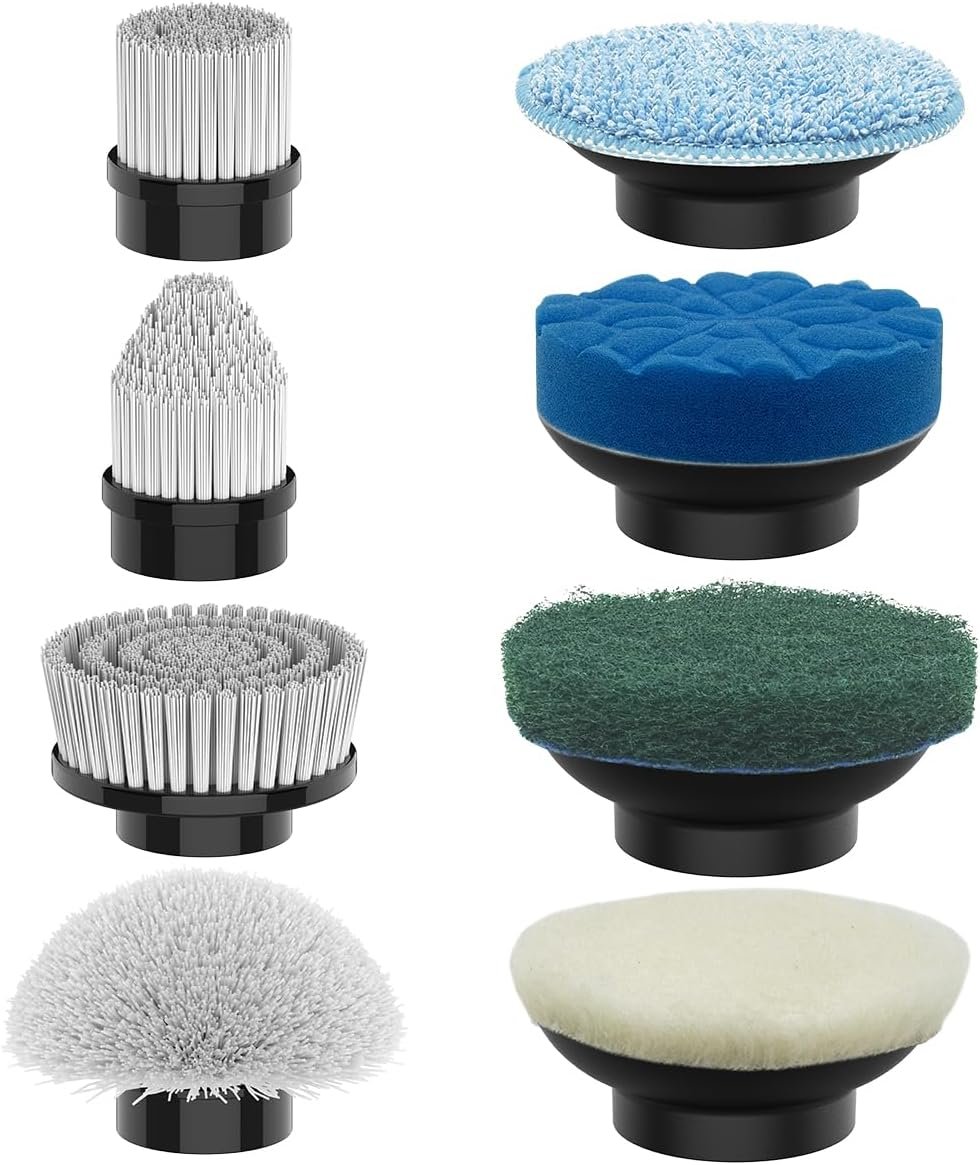
Which brush head for which surface
- Large flat brush: shower walls, tile floors, the floor of the tub.
- Dome brush: tub walls, basins, the toilet bowl and other curves.
- Small flat brush: faucets, shelves, soap niches and the edge of the tub.
- Corner cone: grout lines, corners, drain rings and caulk lines.
- Sponge or soft pad: acrylic tubs, glass doors and chrome.
- Scouring pad: enamel tubs and tile with stubborn film, never acrylic or glass.
The 8-head TUYU kit includes both the brushes and the pads. If your scrubber came with brushes only, a replacement brush heads kit adds the pads.
Speed, pressure and splash
High speed lifts grime faster but throws more water. On vertical surfaces and glass, low speed and slow passes keep the splash in the tub. On the floor of the tub and textured tile, high speed is where the brush does its best work. Keep the head flat to the surface; tilting it puts the edge of the brush on the tile and wears the bristles unevenly.
Aftercare: brushes, battery and the scrubber body
Rinse each head in hot water after the clean, shake it out and let it dry in the air. Bristles that stay wet in a closed cupboard flatten and smell. The TUYU scrubbers are IPX7 rated, so rinse the body and handle as well. Charge with the Type-C cable after a big clean; the battery lasts longer when it is not left flat.
Replace a brush head when the bristles splay or stop springing back. Worn bristles slide over grime and make a powerful scrubber feel weak.
What we look for in power scrubber models for the tub
Power scrubber models for the tub are tested by the same few questions. Does the handle reach the far side without you having to bend over the edge? Is it comfortable to hold at that angle for ten minutes? Does the motor keep its strength when the head is applied against the tub wall, or does it slow? Is the battery life long enough to run through the tub and the surround, and how many hours does a rechargeable pack take to come back?
On those points the TUYU models score well: an adjustable stainless handle from 26 to 45 inches, a motor that buyers say does not bounce or stall under pressure, a 2500 mAh battery rated for up to 90 minutes and a Type-C recharge in three to four hours. The design is simple, which helps ease of use: one button, two speeds, a display that shows the charge. Consider the attachments too: the more of them a kit includes, the fewer surfaces you have to clean with the wrong tool. Attachments for curves, flats, corners and glass cover a whole tub surround and the bathroom sink.
Where any power spin scrubber is limited is old, hard mineral scale. Apply a descaler, give it the time on the label, then scrub. The tool lifts what the chemistry loosens; it quickly removes soap film, but it does not replace the cleaner for scale.
How long a deep clean takes
A first deep clean of a neglected tub and tile surround takes the longest: allow forty to sixty minutes, including the time the cleaner sits. After that, a weekly pass takes ten to fifteen minutes because nothing has time to build up. Buyers who switched from hand scrubbing report that the scrubber cut the time roughly in half and made the job less tiring, which is the real reason the tub gets cleaned more often.
Common mistakes
- Pressing hard: it slows the motor and flattens the bristles.
- Using a scouring pad on acrylic or glass: it leaves fine scratches.
- Scrubbing dry: always wet the surface and use a cleaner.
- Skipping the rinse: cleaner left on stone or grout can etch or attract dirt.
- Storing wet heads in a closed drawer: they flatten and smell.